

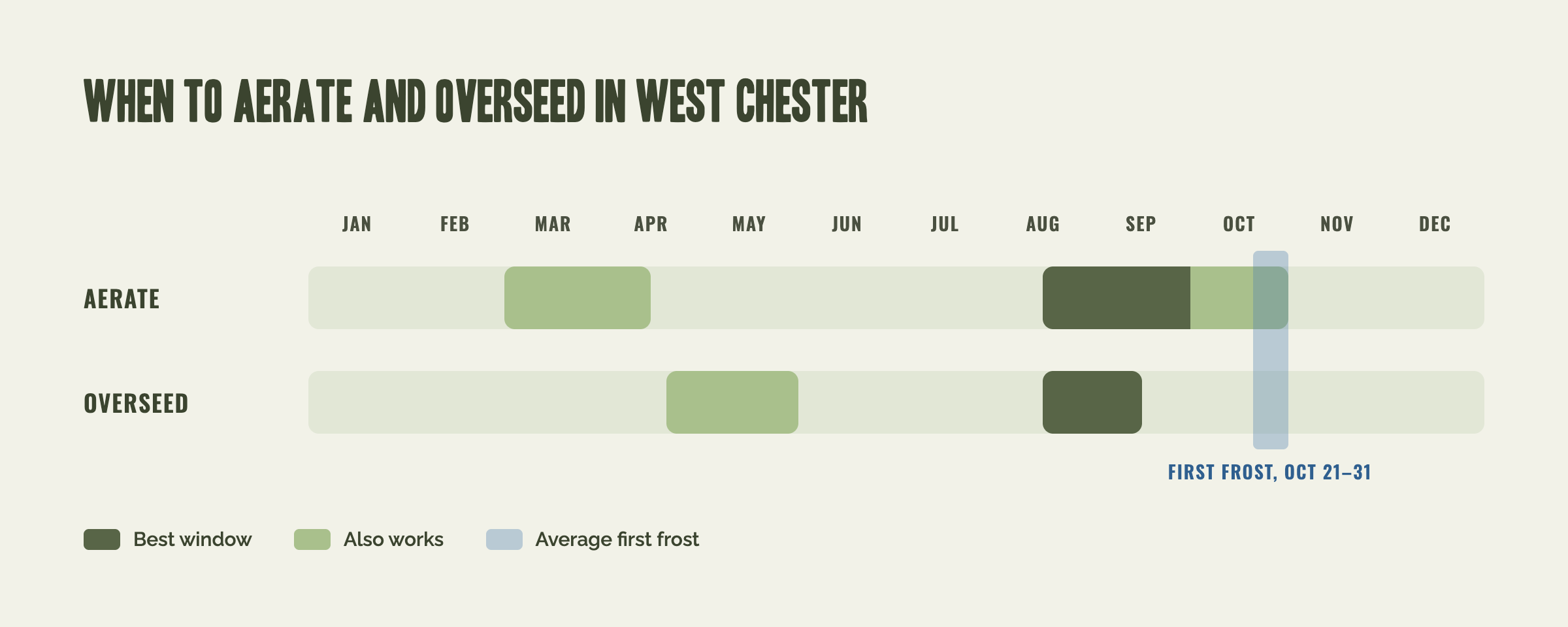
The best time to aerate and overseed a West Chester lawn is late summer into early fall, with seed down by early to mid-September. Most lawns here are cool-season grasses like Kentucky bluegrass, fescue, and perennial ryegrass, which grow best in cool weather. West Chester’s first frost usually lands between October 21 and 31, and a common rule of thumb is to seed at least 45 days before it. Spring can work as a backup, with a couple of catches.
Why Late Summer Beats Spring
Penn State Extension calls late summer to early fall the best time to plant a new lawn, patch bare areas, or overseed. The soil is still warm from summer, which helps seed germinate quickly, and few weeds sprout in fall, so young grass has less competition. Seedlings that come up in September also get two cool growing seasons, fall and the following spring, to root in before summer heat returns.
Spring seeding is harder. Most crabgrass preventers also stop grass seed from germinating, so if you’ve treated your lawn in the spring, you’ll need to wait to sow seed until the product has broken down (usually in late summer). Spring seedlings also get only a few months to establish before July heat and drought. Aerating in spring without seeding is fine, though. Penn State recommends aerating in cool weather, either early to mid-spring or late summer to early fall.
A West Chester Aeration Calendar
| Timing | What to Do |
|---|---|
| Mid-August to mid-September | The best window to aerate and overseed together, and the earlier half is safer |
| Late September to October | Aerate early in this stretch if the lawn needs it. New seed gets risky as frost gets closer |
| November to February | Skip it. Maryland Extension advises against aerating dormant grass |
| March to mid-April | Aerate in cool weather, and hold the seed if you use a crabgrass preventer |
| Late April to May | Seed any areas that skipped the crabgrass preventer |
| June to early August | Skip seeding. Summer seedings struggle with heat, drought, and disease |
Signs Your Lawn Needs Aeration
Compaction happens mostly at the surface. University of Maryland Extension notes that a compacted layer as thin as a quarter to half an inch can keep water and air from reaching the roots. Watch for:
- Rain that puddles or sheets off instead of soaking in
- Thin, worn grass along paths, play areas, and the dog’s favorite route
- Grass that stays thin even after fertilizing
- A spongy layer of thatch more than half an inch thick when you cut out a small wedge of turf
Puddles that sit for days may point to a drainage problem more than compaction. Our yard drainage guide covers those fixes.
Core Aeration vs. Spike Aeration
Core aerators pull plugs of soil about half to three-quarters of an inch wide and 2 to 4 inches deep, spaced 2 to 6 inches apart. Spike and solid-tine machines push holes into the ground without removing any soil, and Maryland Extension warns they can increase compaction. After core aerating, leave the plugs where they fall. They break down on the lawn within a couple of weeks.
How to Aerate and Overseed, Step by Step
- Water a day or two ahead if the ground is dry. Soil should be moist but not wet, so the tines can pull full-length cores.
- Flag sprinkler heads, drip lines, and invisible pet fence wires so the aerator doesn’t catch them.
- Make several passes. When you’re overseeding, Penn State suggests six to eight passes with a core aerator, which gives seed plenty of holes to fall into.
- Spread seed matched to how much sun the lawn gets (see the table below).
- Keep the seedbed moist. New seed needs regular watering, especially until it germinates. Water lightly and often until it sprouts, then cut back gradually as the grass fills in.
- Keep leaves off the new grass. West Chester’s mature trees drop many leaves in October, and a wet mat of them can smother seedlings that are still filling in.
Picking the Right Seed
Penn State Extension’s seed recommendations for southeastern Pennsylvania match the mix to sun and shade:
| Your Lawn | Suggested Seed Mix |
|---|---|
| Open and sunny | 80–90% Kentucky bluegrass, 10–20% perennial ryegrass |
| Sunny with some trees | 40–60% Kentucky bluegrass, 30–40% fine fescue, 10–20% perennial ryegrass |
| Moderate to partial shade | 40–50% fine fescue, 40–50% Kentucky bluegrass, 10–20% perennial ryegrass |
| Heavy shade, well drained | Fine fescue on its own |
| Sunny and prone to drought | Turf-type tall fescue on its own |
Perennial ryegrass germinates in five to seven days, so it thickens a thin lawn fast. Kentucky bluegrass takes two weeks or more to sprout and a few months to fill in, but it spreads over time to repair worn spots. Read the label before you buy. Look for turf-type tall fescue and perennial ryegrass. Coarse pasture types like ‘Kentucky 31’ tall fescue won’t give you a fine-textured lawn, and ‘Linn’ perennial ryegrass tends to fade out over several years.
Let Us Keep an Eye on Your Lawn
Not sure whether your lawn needs aeration this year? Our Lawn Health program includes six visits timed to Pennsylvania’s growing season, with stops in late summer and fall. Along the way, you’ll get recommendations for aeration, seeding, or pest management whenever your lawn needs them. Lawn Health is available to our landscape maintenance clients, so take our package quiz to find the plan that fits your property, or get a ballpark from our online estimator.
Frequently Asked Questions
How often should I aerate my lawn?
University of Maryland Extension recommends core aeration every one to two years for lawns that receive heavy foot traffic. A lawn with light use that drains well may go longer between aerations.
Is fall aeration a good time to lime?
Yes. Lime works best when it gets down into the soil, and Penn State Extension points to aeration as a prime time to apply it. Chester County soils tend to be acidic, so test before you aerate. A $10 soil test kit from your county Penn State Extension office shows whether your lawn needs lime and how much.
Should I dethatch instead?
Usually not. Penn State recommends dethatching only when thatch reaches an inch or more, and only in cool weather with good soil moisture. Core aeration helps with thatch too, since the soil in each plug carries microbes that break it down.
Will aeration fix bare spots on its own?
Aeration opens up the soil, but bare spots still need seed to fill in. Aerating first gives the seed better contact with the soil because the seed drops into the holes the aerator leaves behind.
When is it too late to overseed?
In West Chester, seeding after early to mid-September cuts into the 45 days new grass needs before the first frost, and seed won’t germinate once late-fall soil gets too cold. If you miss the window, mid-to-late spring is Penn State’s other recommended time to seed. Just skip the crabgrass preventer on those areas.
