
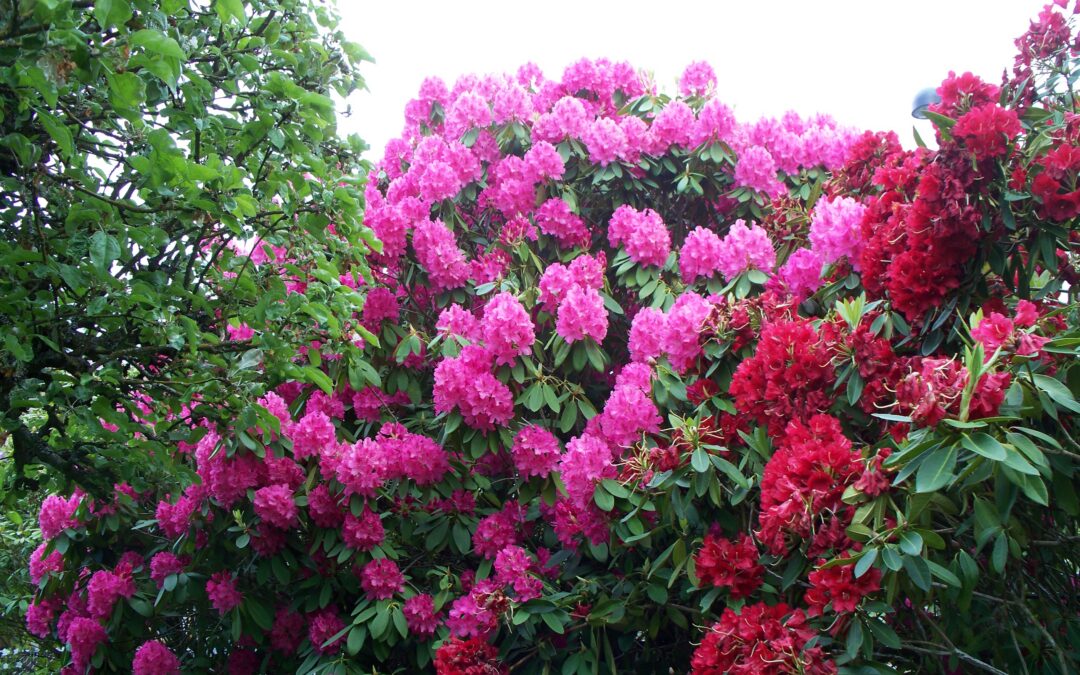
You’re not alone. In southeastern Pennsylvania’s climate, these shrubs tend to, well, accumulate. And once they’ve gone a few seasons without attention, you’re facing a decision: grab the loppers yourself, or call someone who does this for a living.
Here’s a guide to both.
Why Rhododendrons and Azaleas Get Away From You
These plants thrive in Chester County’s combination of acidic soil, humid summers, and moderate winters. Under the right conditions, a rhododendron can add six to twelve inches of growth per year. Miss two or three seasons of pruning, and you’re suddenly dealing with a fifteen-foot plant that was supposed to stay at eight.
Azaleas tend to be a little more forgiving, but they have their own quirks, particularly a tendency to get leggy. That means a tendency to drop foliage from the lower branches and leave you with something that looks like a tangle of sticks topped by a pom-pom of leaves.
Neither plant is hard to save. But how you approach the rescue depends on how far things have gone.
The DIY Path: What You Can Tackle Yourself
For shrubs that are overgrown but still fundamentally healthy—meaning you have good foliage coverage, no signs of disease, and you’re dealing with maybe one to three feet of excess growth—a careful DIY pruning is absolutely within reach.
Both rhododendrons and azaleas set their flower buds in the late summer and fall for the following spring. The window you want is immediately after flowering, typically late May through mid-June in this part of Pennsylvania. You have about four to six weeks to work before the plant starts building its buds for next year.
- Remove dead, crossing, or rubbing branches first. These come out regardless of season.
- Cut to just above a node or cluster of leaves, not in the middle of a bare stem.
- For light shaping, take no more than one-third of the plant’s overall mass in a single season.
- On azaleas specifically, look for the long “watersprout” shoots that have grown well beyond the shape of the plant. These are your first targets.
You’ll need sharp bypass pruners for stems under half an inch, loppers for anything thicker, and a pruning saw for the real woody stuff. Dull tools crush stems instead of cutting cleanly, and crushed stems are an open invitation to disease. Clean your blades between plants.
When It’s Time To Call in Help
There are situations where DIY pruning stops being the right call, not because homeowners aren’t capable, but because the stakes get higher and the margin for error gets smaller.
Your Plants Have Severe Overgrowth
By severe overgrowth, we mean more than three to four feet of excess height. Rhododendrons can be rejuvenated through hard pruning (i.e., cutting stems back to six to twelve inches from the ground), but this is a high-commitment approach.
Do it wrong and you’ll stress a plant that may already be struggling. Do it right, in the right season, and you can reset a twenty-year-old plant and get a decade more of blooms out of it. The decision requires reading the plant’s overall vigor, understanding its root system, and knowing which canes to prioritize.
You’re Not Sure What You’re Looking At
Overgrown azaleas and rhododendrons can mask borers, root rot, phytophthora, and leaf spot diseases. If you’re seeing dieback that doesn’t track with normal seasonal patterns, or if the plant looks weak even when it’s actively growing, pause. Pruning a stressed or diseased plant without addressing the underlying issue often makes things worse.
The Plant Is Near a Structure or Other Landscaping
A fifteen-foot rhododendron pressed against your foundation is probably trapping moisture against your siding and potentially giving pests a sheltered corridor into your house.
Pruning close to structures requires attention to not just the plant but what’s around it. Similarly, if your overgrown shrubs are intertwined with healthy plants you want to keep, the work requires a thoughtful, layered approach rather than just cutting back.
You Want It Done Once, Correctly
There’s a difference between pruning that makes a plant look better for a season and pruning that sets it up for a healthier, more manageable shape over the long term. The latter takes knowledge of how the plant grows and where to make cuts that redirect energy rather than just remove bulk. If you’ve already attempted a pruning and the plant came back wilder than before (or not at all), it’s worth having someone walk the property with you.
Local Tips
The azaleas and rhododendrons you’ll find most commonly across West Chester, Downingtown, Malvern, and the surrounding townships tend to be the larger-leafed varieties like Rhododendron maximum and various hybrids that have had decades to establish deep root systems. These plants are hardy, but they don’t respond well to being handled the same way you’d approach a smaller ornamental.
Soil pH also plays a role here. Chester County soils can vary significantly even within a single neighborhood. If your rhododendrons have been declining in vigor along with their overgrowth, that might be a pH issue. Check with your local PennState Extension office for a soil test to tell you whether your plants need sulfur amendments.
The Bottom Line
If you’ve got a plant that’s two or three feet past where you’d like it, you’re in decent DIY territory; just wait until after it blooms, cut thoughtfully, and don’t take off more than a third at a time.
If you’re staring down a plant that’s blocking windows, growing into your gutters, or hasn’t been touched in a decade, that’s a different job. At that point, you’re making decisions about the plant’s long-term structure.
Clean Peak’s landscape teams work throughout Chester County and can assess what your overgrown shrubs need, from pruning to soil amendments. Get a free estimate, and put those plant overlords back in their places.
