

Most soggy yards trace back to one of three causes: roof water emptying too close to the house, ground that slopes the wrong way, or a low spot where water has nowhere to go.
The fix depends on the cause. A buried downspout line can dry out a wet foundation bed, and regrading corrects a backward slope. For low areas, a French drain, dry well, or dry creek bed carries the water away. Our standalone drainage systems start at $3,000, and drainage often gets folded into a larger landscape project.
Why Chester County Yards Hold Water
West Chester averages about 47 inches of precipitation a year, and wet years go well past that: in 2018, the county seat recorded 68.91 inches. The storms are getting heavier, too. Pennsylvania’s Climate Impacts Assessment puts the rise in average annual rainfall at roughly 10 percent since 1901, and a Climate Central analysis found that the heaviest storms in Pennsylvania and other northeastern states drop about 60 percent more rain than they did six decades ago.
That water adds up fast. One inch of rain on 1,000 square feet of roof sheds about 623 gallons. On a half-acre lot, the USGS figures a 1-inch storm delivers 13,577 gallons. If the ground can’t absorb it and the slope can’t carry it off, it pools on the lawn and in the beds or soaks the soil against your foundation.
Signs Your Yard Has a Drainage Problem
- Puddles still sitting there a day or more after the rain stops
- Lawn that squishes underfoot or thins out, or moss creeping into sunny spots
- Mulch washed onto the walkway or driveway after a storm
- Soil eroding out of the beds until shrub roots show
- Downspouts that empty right at the base of the house
- A damp, musty basement after heavy rain
- Patio pavers or walkway stones starting to sink
Find the Source Before You Pick a Fix
On a property visit, we’ll look at where your downspouts empty, where water collects, and how the ground slopes away from the house. According to the National Association of Landscape Professionals, grading is the most common cause of poor drainage. The International Residential Code calls for the ground to drop at least 6 inches within the first 10 feet of a foundation, with patios and walkways near the house pitched away at a 2 percent slope or more.
Common Drainage Fixes and When Each One Fits
Downspout Extensions and Buried Downspout Lines
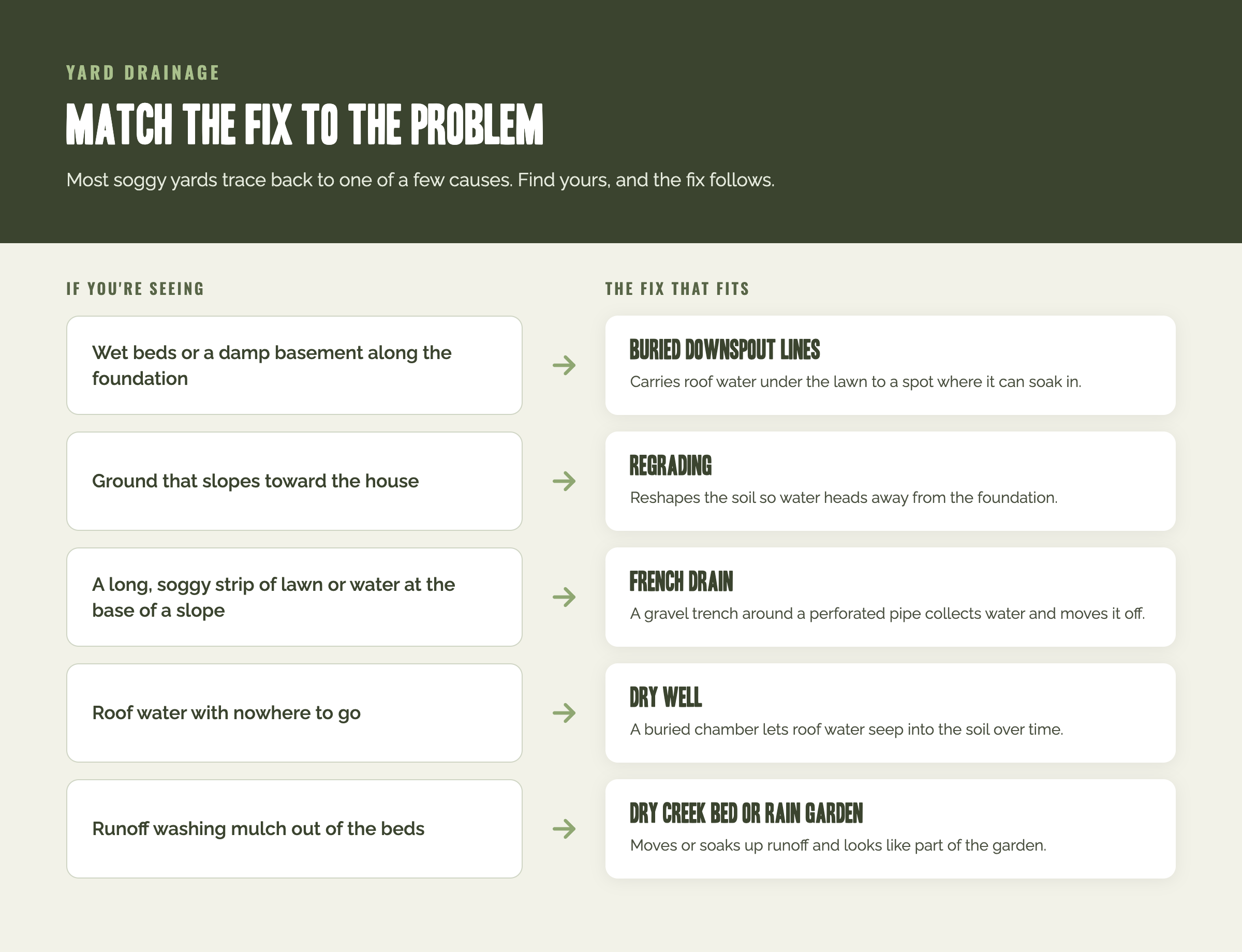
A downspout draining half of a 1,000-square-foot roof carries about 310 gallons per inch of rain. Many builders and inspectors suggest releasing that water at least 4 to 6 feet from the foundation, or 10 feet or more on a flat lot. A buried line takes it under the lawn to a spot where it can soak in or flow away, so you’re not mowing around a plastic extension.
Regrading
When the ground slopes toward the house, regrading reshapes it so water heads the other way. We’ll add soil where the ground has settled, shape the slope, and reseed or sod the bare areas. Beds can also creep upward over years of fresh mulch. That’s one reason our spring clean-up strips out the old, compacted layer before laying a new one.
French Drains
For a long, soggy strip of lawn, the base of a slope, or the ground behind a retaining wall, a French drain is often the answer. It’s a trench filled with gravel around a perforated pipe. Water seeps in along its length and travels through the pipe to a discharge point. Behind a wall, it also helps relieve the water pressure pushing against the stone.
Dry Wells
Roof water with nowhere to go can instead head underground. A dry well is a buried chamber that collects water from a downspout or drain line and lets it seep into the surrounding soil over time.Dry wells work best in well-draining soil and where the water table is low, so we’ll check the ground before recommending one.
Dry Creek Beds
A dry creek bed handles surface water in plain sight. River stone lines a shallow channel that carries runoff through the yard the way a streambed would, and between storms it reads as a landscape feature. Edge it with ornamental grasses like Hameln or Karl Foerster and a few boulders, and it can turn a washout into one of the prettiest corners of the property.
Rain Gardens
A rain garden catches runoff in a shallow, planted basin and lets it soak in. Penn State Extension says a rain garden should drain completely within 24 hours and shouldn’t go in a spot that stays wet. Extension guides generally recommend placing them at least 10 feet from the house, and the USDA’s Natural Resources Conservation Service lists 20 feet or more as the preferred distance. Planted well, a rain garden fills in with color through the summer and gives pollinators a place to land.
What Yard Drainage Costs
Our standalone drainage systems start at $3,000, and you’ll find current figures on our pricing page. Where your project lands depends on:
- How long and deep the drain line goes
- How far the water has to travel to a safe discharge point
- Whether equipment can reach the work area
- Rock, roots, or utility lines in the way
- Restoring the lawn and beds after the work
Fix Drainage During Your Next Project
The easiest time to correct drainage is while the ground is already open. If a patio, walkway, retaining wall, or new planting is on your list, we can plan the drain lines and grading into the same project, so you’re not paying to dig up the yard twice. Our paver patio cost guide covers how drainage factors into a patio budget, and our retaining wall page explains how drainage keeps a wall stable. For the full range of what we install, see landscape design and installation.
Get Your Yard Back
Tell us where the water’s collecting, and we’ll come take a look. Book a free property visit, and we’ll walk the problem spots with you and recommend a fix that fits your yard and budget. Planning a bigger project, too? Try our online estimator for a ballpark first.
Frequently Asked Questions
How long should puddles last after it rains?
Short-lived puddles after a downpour are normal, especially in low or clay-heavy spots. As a rule of thumb, standing water that’s still there a day later points to a drainage problem.
Do I need to call 811 before digging a drain?
Yes. Pennsylvania law requires homeowners and contractors to contact PA One Call by dialing 811 at least 3 business days before digging. The service is free, and utilities mark their buried lines so nobody hits a gas or electric line mid-trench. On our projects, we make that call.
Can I send drainage water to the street or my neighbor’s yard?
We plan discharge points so that the water either soaks into your property or reaches an approved outlet. Sending it next door just moves the problem. Chester County municipalities also have to adopt stormwater standards under the county’s Act 167 plan, so a larger system may need your township’s review first.
Will a yard drain fix a wet basement?
Outdoor drainage can help keep surface water away from your foundation, which may reduce basement moisture. Water coming up through the floor or seeping through the foundation walls is a job for a basement waterproofing company.
When’s the best time of year to fix drainage?
Spring and fall both work. Penn State Extension identifies mid-to-late spring and late summer to early fall as the best windows for seeding, which matters when regrading, leaving bare soil behind. Drainage work pauses once the ground freezes.
Do drainage systems need maintenance?
A little. Keep leaves and debris off catch basin grates and downspout screens, and clear out dry creek beds after heavy storms. Our fall clean-up includes leaf and debris removal, which helps keep drains from clogging.
