
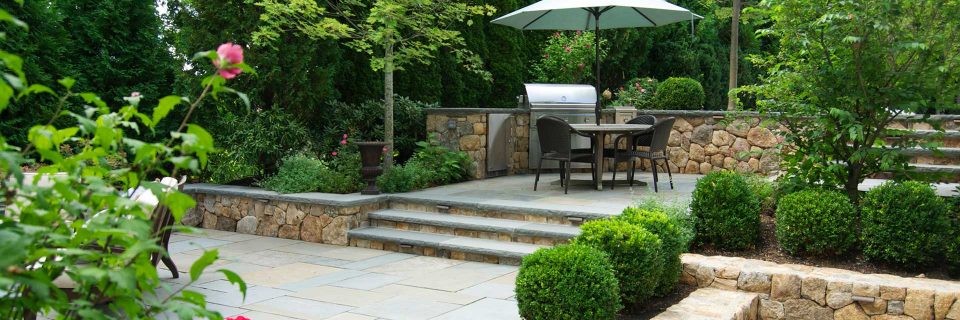
A paver patio in Chester County usually runs $10,000 to $20,000 for a 200 to 400 square foot space, starting around $7,500 for smaller or simpler builds. The final price of your project depends on size, material, and how much prep your yard needs.
Per square foot, that’s roughly $25 to $50 installed, depending on material and the shape of the project.
You can pull a ballpark for your own yard in a couple of minutes with our online estimator, and every figure here is cross-checked against our live pricing page.
What Influences the Price
- Size: Square footage is the biggest lever. More space means more material, more base prep, and more labor.
- Material: Concrete pavers cost the least, natural stone the most, with brick in between.
- Site prep and grading: A flat, easy-to-reach yard installs faster than a sloped one that needs regrading or machine access.
- Drainage: Water has to go somewhere. On some lots, that’s a simple pitch away from the house; on others, it means a drainage system built into the project.
- Features: Fireplaces, lighting, steps, curves, borders, and built-in seating each add labor and material on top of the base number.
- Access: If it is not machine accessible, this can impact price significantly.
Concrete, Pavers, or Natural Stone?
Material is the choice that shifts your budget the most, so it’s worth understanding before you fall in love with a photo. Here’s how the three common patio materials compare on installed cost.
| Material | Look and Feel | Installed Cost per Square Foot (2026) |
| Concrete pavers | Clean and uniform, loads of color and pattern options | $35-45 |
| Brushed or stamped concrete | Classic, warm, timeless | $25-35 |
| Natural stone (bluestone, flagstone) | Organic and high-end, no two pieces alike | $50+ |
Concrete pavers give you the most design freedom for the money, which is why they’re the popular pick. Natural stone costs more up front, but for many homeowners, the character is worth it. There’s no single right answer. The best material is the one that fits your yard and your budget.
How Clean Peak’s Pricing Compares
So how do our numbers stack up against the wider market? Nationally, a paver patio averages $35-45 per square foot, while natural stone can cost $50 or higher.
However, national averages aren’t entirely accurate because pricing in our neck of the woods trends higher for reasons we’ll get into in the next section.
| Paver patio, 200–500 SF | Typical Installed Cost |
| National average (2026) | $5,000–$16,000 |
| Northeast / Chester County | $10,000–$20,000 |
| Clean Peak | $10,000–$20,000 (starting at $7,500) |
Why Chester County Patios Cost What They Do
Chester County is in USDA zones 6b and 7a, so our ground repeatedly freezes and thaws each winter. A patio built on a shallow base will heave, crack, and become uneven within a few seasons. Building one that lasts means excavating deeper and compacting several extra inches of stone base that a patio in, say, Georgia would never need.
That base is invisible once the patio’s finished, but it’s the difference between a patio that looks great for twenty years and one that needs an overhaul in three. When a Chester County quote comes in above a national average, most of that gap is underground, doing the unseen work of holding your surface flat through every freeze.
Ways To Keep the Budget in Check
A patio is a big line item, but you have more say over the final number than you might think. A few ways to stretch the budget without cutting corners:
- Right-size the footprint: A patio you’ll use every day beats an oversized one you padded to look impressive.
- Mix materials: A concrete-paver field with a natural stone border gives you the high-end look for a fraction of the all-stone price.
- Phase the work: Lay the patio now, add the fire pit, seat wall, or lighting next season. The groundwork’s already there when you’re ready.
- Keep the shape simple: Straight lines and squared corners install faster than sweeping curves and stacked levels.
- Bundle it: When a patio is one piece of a larger yard plan, installing it alongside planting or lighting can save 10 to 20 percent versus doing each on its own.
When the Patio Is Part of a Bigger Picture
For a lot of our clients, the patio is the anchor of a whole outdoor living space rather than a standalone slab. Picture the full scene: pavers underfoot, a fire pit for the shoulder seasons, a low seat wall that doubles as extra seating, planting softening the edges, and lighting that keeps the space alive after sundown.
Built together, those pieces share design time, setup, and labor, which is why a bundled outdoor living project usually costs less than adding each element piecemeal over the years. Our larger design-and-build packages run in the $50,000 to $100,000 range for this kind of backyard transformation. If a patio is the first step toward a yard you never want to leave, it pays to plan the whole picture up front, even if you build it in stages.
Start With a Free Online Estimate
A patio should be the easiest room in your house to spend time in. Getting there starts with a number you can plan around. Run your project through our online estimator for a ballpark, then let’s talk. We’ll walk your yard, listen to how you want to live in the space, and map out a patio that earns its cost for decades to come.
FAQs
How much does a paver patio cost in Chester County?
Most run $10,000 to $20,000 for a 200 to 400 square foot space, starting around $7,500. Size, material, and site prep decide where you land.
Are pavers cheaper than natural stone?
Yes. Concrete pavers install for roughly $35-45 per square foot, while natural stone like bluestone or flagstone runs $50 or more. Plenty of homeowners split the difference with a paver field and a stone border.
Why does a paver patio cost more here than the national average?
Our freeze-thaw winters call for a deeper, better-compacted stone base than warmer regions need. That extra groundwork is what keeps the surface flat and crack-free through years of cold.
Do pavers or poured concrete cost more?
Poured concrete usually costs less up front. Pavers resist cracking, repair easily (you swap a single paver instead of the whole slab), and hold their looks longer, so over the life of the patio many homeowners find them the better value.
Can I add a fire pit or seat wall later?
Yes. Building the patio first and adding features in later phases is a common way to spread the cost, and the base is already set when you’re ready for the next piece.
How long does a paver patio take to install?
Most residential patios take a few days to a few weeks+, depending on size, material, and site access. You’ll get a timeline with your estimate.
How do I get a price for my yard?
Start with our online estimator for a quick ballpark, then reach out for a free on-site visit. We’ll walk your property, talk through materials, and send a plan that fits your space and your budget.
