
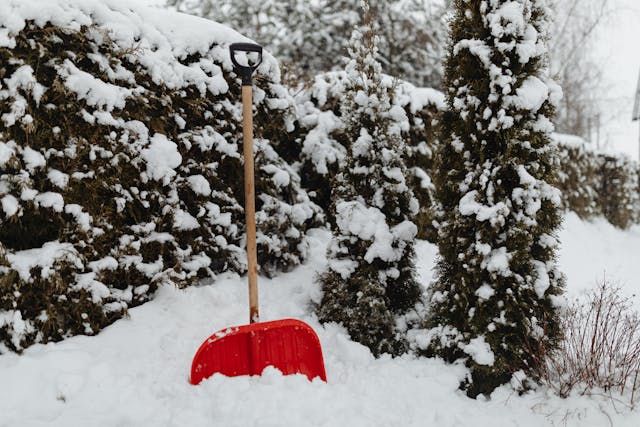
Getting your Chester County yard through winter comes down to timing more than effort.
- Through late fall, you’re clearing the leaf load, cutting beds back, feeding the lawn, and getting fresh mulch down.
- Right before the first hard freeze, you drain the irrigation and give trees and shrubs one last deep drink.
- Once deep winter settles in, the work shifts to protection: guarding evergreens from deer and de-icing salt, and easing heavy snow off branches.
- By late winter, you’re pruning and setting up for spring.
A yard that looked lush in July can limp into spring if the cold catches it unawares. Most of what prevents winter damage happens in a handful of weeks each year. Here’s how the season breaks down for a Chester County property and where we can take it off your hands.
Late-Fall Prep: Before the Ground Freezes
- Remove leaves and debris from the lawn before they mat down. A thin scatter feeds the soil and gives pollinators a place to hibernate, but a thick, wet layer blocks light and air and invites mold and pests.
- Cut back perennials and spent annuals and clear flower beds to give overwintering pests and disease fewer places to hide.
- For the last mow of the year, cut the lawn a little shorter than its summer height (around two inches) so long blades don’t fold over and trap moisture under snow.
- Fall feeding sets the lawn up underground. For most Chester County lawns, that means a slow-release, high-nitrogen fertilizer with a potassium winterizer, timed before the first frost so roots keep growing after the blades die back.
- Apply a fresh two- to three-inch layer of mulch over beds to insulate roots through our winters’ freeze-thaw swing. Be sure to keep it a few inches back from trunks and stems.
This is most of what our fall clean-up covers, from the leaf haul-off to the final mow and the winterizer feed. If raking a mature-canopy property in November sounds like a lost weekend, that’s exactly the part to hand over.
Before the First Freeze: The Water Deadline
- Shut down and drain irrigation systems before a hard freeze, since water left in the lines expands and can crack pipes and fittings. Clear drip and sprinkler systems along with outdoor faucets and hoses.
- Give trees, shrubs, and especially evergreens one long, deep watering while the soil is still workable. Evergreens lose moisture through their needles all winter, and roots that go into the freeze hydrated come out in far better shape.
- Wrap the trunks of young or thin-barked trees, and protect shrubs exposed to wind or road spray with burlap. This does double duty against winter deer browsing.
Deep Winter: Protection and Watching
- Deer feast on evergreens once other food gets scarce; junipers, arborvitae, and rhododendrons take the brunt of it. Repellents, burlap barriers, and fencing around the plants you most want to protect can spare them a rough spring.
- De-icing salt burns both plantings and hardscape. Near beds and walkways, a calcium, magnesium, or potassium chloride blend is gentler than rock salt, and marking your bed edges keeps shovels and plows off the shrubs underneath.
- Heavy, wet snow can snap evergreen branches under its own weight. Brushing it off gently after a storm helps, and shoveled snow is better piled on the lawn than heaped onto beds.
- Snow and ice clearing is its own job on its own schedule. If you’d rather not watch the forecast before dawn, that’s what our snow removal service is for. It’s separate from maintenance, so it helps to arrange it before the season’s first storm.
Pre-Spring: Setting Up the Comeback
- Save structural heavy pruning for late winter, when trees and shrubs are dormant and their shape is easy to see. Light shaping can happen in fall, but the bigger cuts wait. Larger tree work is where we’d bring in our tree care crew.
- Take stock of winter damage: branches that split, plants the deer found, or bed edges that heaved during freezes. A quick inventory now makes the spring clean-up faster.
- Leave mulch and burlap in place until the hard freezes are clearly behind us, since pulling protection too early exposes tender new growth to a late cold snap.
When the ground softens, our spring clean-up and planting after-care pick the property back up and lead it into the growing season.
Ready to Hand Off the Season?
Winter prep is a string of small deadlines spread across three months, and it’s easy for one to slip past in a busy fall. If you’d rather welcome spring with a yard that’s ready to green up instead of one that needs rescuing, we can carry the whole process for you, from the fall clean-up and winterizer feed to the plant protection and snow clearing once the storms arrive.
Not sure how much help you want? Our package quiz matches your property to a maintenance plan in a couple of minutes, or you can tell us what you’re after and we’ll put together a free estimate.
Frequently Asked Questions
When should I start getting my yard ready for winter in Chester County?
Most of the fall work fits between early October and late November, before the first hard freeze or snowfall. The exact window shifts with the year’s temperatures, so it helps to finish the leaf removal and last feeding before a cold snap locks the ground up.
Do plants need watering in winter?
They do, especially evergreens, which lose moisture through their needles all season. We recommend one long, deep watering before the ground freezes, then watering again on the occasional winter day that climbs above 40 degrees, when the soil isn’t frozen.
What de-icer will not hurt my plants and hardscape?
Rock salt is the harshest on both. Near beds, walkways, and patios, a blend based on calcium, magnesium, or potassium chloride is easier on plantings and less likely to worsen freeze-thaw damage on stone and pavers. Using less, and only where you need traction, helps too.
Is it too late to fertilize or plant once fall arrives?
Fall is a good time for both. A slow-release feeding before the first frost strengthens roots for spring, and cool-season planting gives roots time to settle before the ground freezes. Once hard frosts are regular, hold off until spring.
Does snow removal come with a maintenance package?
Snow removal is a separate service with its own schedule, so you can set it up whether or not you have a maintenance plan with us. Regular winter visits come with our Premium and custom plans. If you want snow covered, it helps to arrange it before the season’s first storm.
Should I cut perennials back in fall or leave them for winter?
Either works, and it’s partly a judgment call. Cutting most perennials back clears out spots where pests and disease overwinter. Leaving a few ornamental grasses and seed heads standing gives you winter texture and feeds the birds, so we can go either way depending on the look you want.
